
Design is changing faster than companies know how to hire for it...
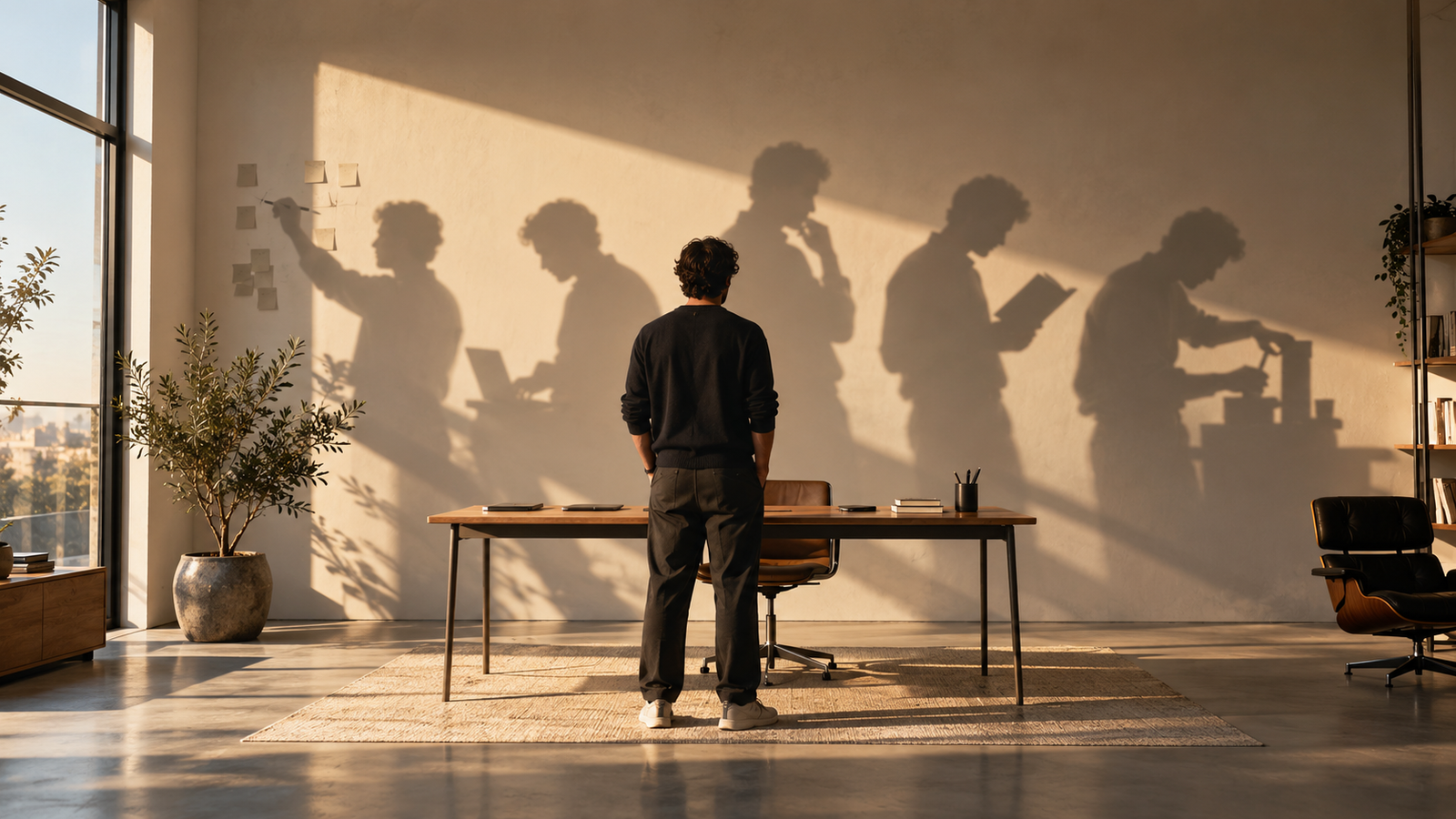
One of the strangest things about being a designer right now is that the job is changing faster than the way companies hire for it.
I have been through hiring processes with companies explicitly looking for designers who understand AI, can work closer to technology and can help introduce new ways of working into their teams. Yet many of those processes still evaluate designers through almost the same definition of the role we were using a few years ago.
I don’t think that necessarily means companies are hiring badly. I think many genuinely know they need something different, but they haven’t worked out exactly what that person looks like yet. And that creates a weird gap.
Some designers are already evolving into a much broader role, but the job titles, team structures and hiring criteria haven’t caught up with them.
I know that because I am living it.
I still use Figma. Sometimes a lot. Sometimes I barely open it. That sentence alone probably explains how much my job has changed over the last two years.
For most of my career, being a designer meant there was a point where my work stopped. I could research the problem, understand the business, define the product, create the brand, design the experience, build the UI and prototype how everything should behave. As a Product Designer, Creative Director or consultant, I could influence far more than the pixels, but eventually something had to be handed over.
That boundary feels completely different now.
The job is changing
AI has not simply given me a faster way to create screens. It has given me access to parts of product development that, two years ago, I would never have imagined doing myself.
I can work inside a codebase. I can understand enough of what I am reading to investigate a problem, follow how something works and challenge a technical decision. I can work with APIs, databases, permissions, authentication, security, AI systems and actual product logic. I can build something, break it, understand why it broke and go back to the product decision that caused it.
Sometimes the fastest way for me to understand whether an idea works now is not to prototype it in Figma. It is to build it, that is a massive change.
I have created a social platform for one of my own projects. I have worked on the systems, community mechanics, user behaviour and all the things that happen behind the interface. A few years ago, I would have thought about that project primarily through product, UX and creative direction. Now I can be involved much deeper in how the thing actually functions.
With Pedro, I have been building a financial platform where our conversations are not limited to how the product should look. We are thinking about data, AI, architecture, security, workflows and what the system is actually allowed to do.
The same happened with Bargly. It is not just an app we designed for local businesses. We have had to think about discovery, social behaviour, businesses, shoppers, rewards, data, different user types and how all of those things connect. Designing the screens is almost the easy part.
This is what I mean when I say the role has changed.
Design is becoming much more hands-on
For years, our industry became increasingly specialised. One person did research, another UX, another UI, somebody owned the design system, engineering took care of implementation, and eventually everything came together.
There are still companies and products where that structure makes complete sense but, I don’t think we can pretend that nothing is changing.
A strong designer with experience, taste, product judgment and the right AI tools can now cover an extraordinary amount of ground. Not because AI magically makes that person good at everything, but because many of the barriers that previously stopped us from entering another discipline have become much lower.
I don’t need to spend ten years becoming a traditional software engineer before I can understand what is happening in a codebase. I can learn while working.
I can ask questions about something I do not understand, inspect the answer, read the code, test it, compare approaches and gradually build a mental model of a technical system that would have been almost inaccessible to me before.
That is what I find exciting about AI. Not prompting. Not asking ChatGPT to make a button.
Learning.
Experience becomes even more valuable
There is a weird idea that AI somehow reduces the value of experience because everybody now has access to the same tools. I think the opposite is happening.
Anyone can generate something. Knowing whether that thing is any good is a completely different problem.
After all these years working in design, product and creative direction, I have opinions about what should exist. I know when an interaction is unnecessarily complicated. I know when a visual system has lost its personality. I can normally feel when a product is solving the wrong problem, even if I still need research and testing to understand exactly why.
AI gives me leverage on top of that experience. It means I can take an idea that exists in my head and get much closer to a working version before the old process would even have reached handoff. That is the part I think designers need to pay attention to.
The valuable designer is becoming less defined by how perfectly they can deliver a Figma file and more by how far they can take an idea.
Can you understand the problem? Can you make the right product decisions? Can you create the brand? Can you design the experience? Can you understand enough of the technology to know what is possible? Can you build a working version? Can you test it with real people, learn from it and change direction quickly?
That combination is becoming incredibly powerful.
Smaller teams will be able to do much more
This is probably the uncomfortable part.
I think product teams are going to get smaller. Not everywhere and not overnight, but the economics have changed. Work that previously required several people can increasingly be done by one or two very experienced people using AI well.
That doesn’t mean one person suddenly knows everything. It means individual capability has expanded enormously. And companies are already restructuring around a world in which productivity looks different. This week, Microsoft opened voluntary exit offers to around 60,000 employees while simultaneously investing enormous amounts of money into AI infrastructure. This isn’t a prediction about some distant future. The way technology companies organise people and work is already changing.
For us designers, I think ignoring that would be a mistake.
There will still be design teams. There will still be specialists. There will still be incredibly complex products that need many people with very deep expertise. But I also think there will be many more companies asking why they need five people to do something that two exceptional people can now do faster.
That is uncomfortable. But uncomfortable doesn’t make it untrue.
This year, I decided to prepare for that version of the industry
I didn’t consciously sit down in January and decide that I needed to reinvent my career. It happened because I had time, problems I wanted to solve and access to tools that suddenly allowed me to go much further than before.
I started learning. Then I started building. Then I realised I could understand things I previously assumed were outside my role and eventually something changed in the way I saw myself professionally.
I’m still a designer. Design is probably the strongest skill I have. But “designer” on its own doesn’t describe the work anymore.
I can create the idea, shape the product, build the brand, design the experience, understand the system, work with AI, get into the code and help take something all the way to a functioning product.
Sometimes that process starts in Figma. Sometimes it doesn’t. The important thing is that it no longer has to end there.
I think this is the opportunity designers have in front of us right now. We can protect the boundaries of what our job used to be, or we can use this moment to become much more capable than we ever thought possible.
For me, this year has been about choosing the second option.
And I don’t think I could go back.